
Durham Region Poverty Response Steering Committee
In May of 2025, the Region of Durham Social Services and Health Departments convened community members to drive an action-oriented response to poverty. This was a continuation of work that began in 2020 but was waylaid by the pandemic. Regional Council directed these departments to establish poverty response efforts.
The first step was a Durham Region Poverty Response Community Workshop. This one-day event brought together community voices, service providers, regional leadership, and people with lived and living experience with poverty.
One important outcome of that meeting was the establishment of a Durham Region Poverty Response Steering Committee of which the DWA Executive Director is a member. In these early days of the committee, the work has focused on building a shared understanding of the issues across the region, aligning with ongoing initiatives and identifying opportunities for action.
Lever of Change
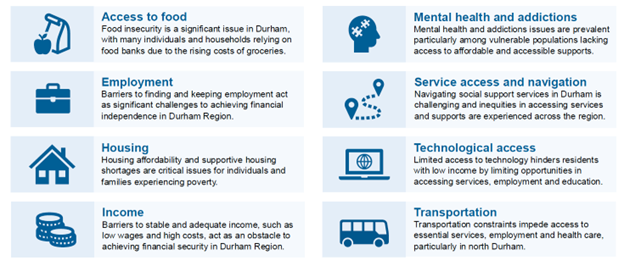
The Poverty Response Steering Committee’s focus is to work through the identified Levers of Change. These levers represent the systems, conditions or barriers that, if addressed, could reduce poverty and improve the quality of life for those experiencing poverty. Levers of Change are key areas where focused action can lead to meaningful improvements. By identifying and working on these Levers, we can target the conditions and root causes of poverty and create more sustainable, community-driven solutions. There may be adjustments to these levers as the steering committee starts its work. Other aspects of levers include physical health, child care, and equity.
Some of the challenges facing the steering committee:
- Funding and Resource Challenges: Community support organizations face funding challenges, limiting their ability to meet demand and expand services.
- Service access constraints: Residents face challenges accessing supports and services, either due to physical access or through wait times/lists.
- Interconnectedness of Levers: Often, individuals require support across systems, and managing service needs alone can be exhausting.
- Rural access challenges: Rural and north Durham residents have difficulty accessing the same community services and supports that are available in urban centres and south Durham.
These considerations will guide the development of a Poverty Response Program that supports and builds on the work already being done by partners across the region and aligns with the priorities of the Durham Region Strategic Plan and the Community Safety and Well-being Plan.
The DWA will provide updates as the work continues.
About the DWA:
The DWA creates an annual plan supplying helpful information for community planning. Next month, the DWA will release its annual Labour Market Plan (LMP).
The plan focuses on the following:
- Durham Region demographics change, as do migration trends in and out, residents’ educational attainment, and changes in employers in the local area by employee size and 3-digit NAICs.
- Enhanced Jobs First Durham (JFD) data extracted from the DWA’s boutique job board with hyper-local information.
- An update on Employment Ontario data.
The DWA provides just-in-time custom labour market information and often conducts custom fee-for-service research. If you are interested in local data, please don’t hesitate to contact the DWA.
The Province of Ontario partially funds the DWA to supply Labour Market Information (LMI) to the Region of Durham.
Written by: Heather McMillan, Executive Director, Durham Workforce Authority
Heather’s expertise is developing strong local community labour markets and conducting industry research supported by innovative projects. Heather is a Toronto Sector Skills Academy Metcalf Fellow and was recently awarded her Certified Workforce Development Professional (CWDP) certification from the National Association of Workforce Development Professionals.